Sports guide
NBA Screen Navigation: How Defenders Stay Connected
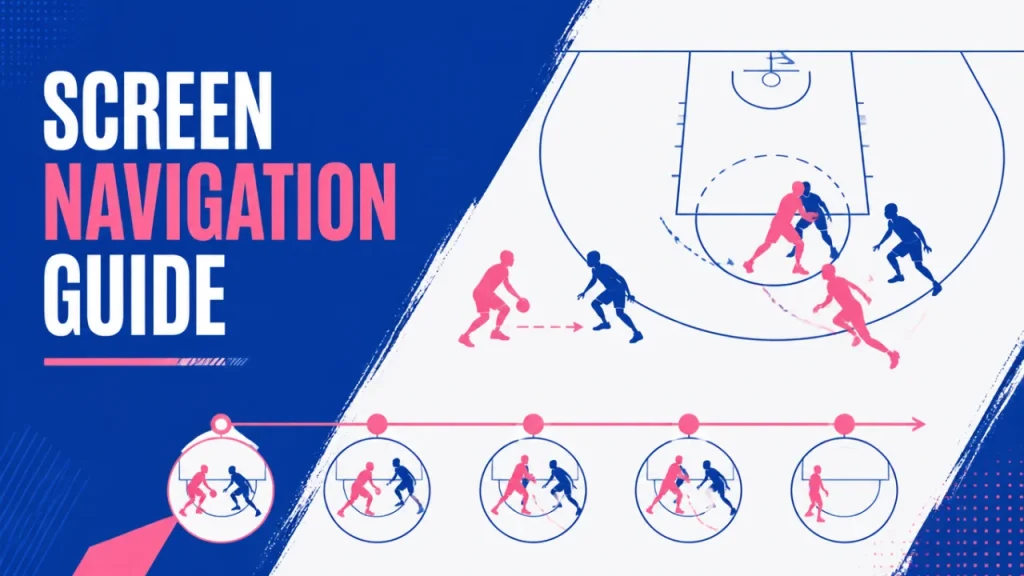
In basketball, screens are fundamental offensive actions designed to free up ball-handlers or shooters. For defenders, effectively countering these screens is a critical skill. NBA screen navigation involves precise footwork, strategic positioning, and clear communication to maintain defensive integrity and prevent easy scoring opportunities.
The Core Techniques: Going Over and Under
Defenders primarily employ two main techniques to get around screens: going over or going under. The choice depends on the offensive player’s tendencies and the specific game situation.
Going Over the Screen
When a defender goes over a screen, they are attempting to follow their assigned offensive player tightly by running above the screener. This technique is typically used against good shooters or ball-handlers who are dangerous pulling up for jumpers. The goal is to deny the offensive player space and time to get off a clean shot or drive. It requires quick lateral movement and often involves a ‘bump’ or ‘shoulder contact’ with the screener to create a slight advantage and prevent being completely sealed off.
- Example: Imagine an offensive player known for their three-point shooting receiving a screen at the top of the key. The defender will likely go over the screen, staying as close as possible to the shooter’s hip, to contest any immediate shot attempt.
Going Under the Screen
Going under the screen involves the defender dropping behind the screener to avoid contact and then re-engaging with their offensive player. This strategy is often used against offensive players who are less of a threat from long range and are more inclined to drive to the basket, or against a screener who might be setting a moving screen. By going under, the defender sacrifices a moment of direct coverage but aims to cut off potential driving lanes and force the offensive player into a less favorable position. It also allows the defending team’s big man (the screener’s defender) to ‘show’ or ‘hedge’ more effectively.
- Example: If an offensive player is primarily a slasher who prefers to attack the rim after a screen, their defender might choose to go under, anticipating the drive and positioning themselves to cut off the lane.
The Importance of Communication
Effective NBA screen navigation is rarely a solo effort; it heavily relies on communication between defenders. The defender guarding the screener and the defender guarding the player being screened must work in tandem.
- Calling Out Screens: The defender guarding the screener should loudly call out the screen’s location (e.g.,
AI-generated illustrative image. It does not depict a real match.