Sports guide
NBA Weak-Side Defense: Understanding Help Rotations
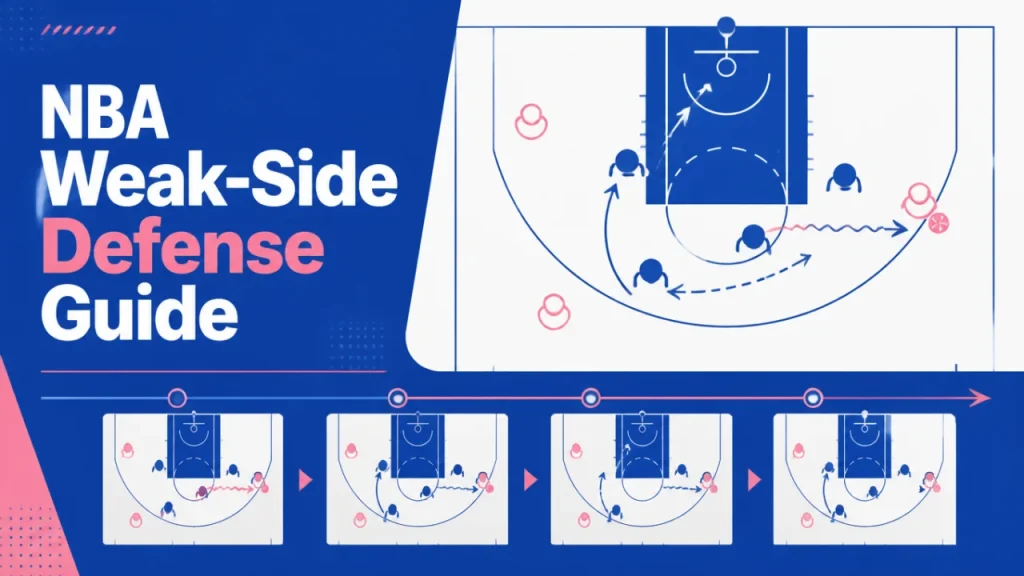
In basketball, especially at the NBA level, defense is a complex dance of positioning, anticipation, and teamwork. One of the most fundamental yet intricate aspects is NBA weak-side defense. This concept involves defenders on the side of the court opposite the ball anticipating offensive movements and providing crucial support to teammates. It’s about collective responsibility and quick reactions, ensuring that even if one defender is beaten, another is ready to step in.
What is Weak-Side Help?
Weak-side help refers to a defensive player leaving their assigned offensive player to momentarily assist a teammate who is guarding the ball-handler or an offensive player attacking the basket. This usually occurs when the ball-handler penetrates the lane or a post player receives the ball deep in the paint on the strong side (the side of the court where the ball is). The defender providing weak-side help acts as a safety net, deterring easy scores and forcing the offensive player to make a difficult pass or shot.
The Mechanism of Weak-Side Help
- Identifying the Threat: A weak-side defender must constantly scan the court, identifying potential threats on the strong side. This could be a guard driving past their primary defender or a dominant big man getting position close to the basket.
- Timing the Help: The timing is critical. Too early, and their own assignment might cut for an easy score. Too late, and the strong-side offensive player might get an uncontested shot or layup. The help usually comes as the offensive player commits to their drive or post move.
- Forcing a Decision: The primary goal of weak-side help is to disrupt the offense. By stepping in, the helping defender forces the ball-handler to either pull up for a contested shot, kick the ball out, or attempt a difficult pass.
Hypothetical Example: Imagine an offensive player on the strong side driving hard to the basket. Their primary defender is trailing. A weak-side defender, positioned near the low block on the opposite side, slides over to contest the drive, forcing the offensive player to alter their shot or pass out.
Understanding the Next Rotation
Weak-side help isn’t a solitary act; it triggers a chain reaction known as the next rotation. When one defender steps in to help, another defender must rotate to cover the helper’s original assignment. This ensures that no offensive player is left completely open. The next rotation is about maintaining defensive integrity across the entire court.
Executing the Next Rotation
- Anticipation is Key: Defenders must anticipate when a teammate will provide help and be ready to rotate immediately. This often involves calling out assignments and communicating verbally.
- Filling the Gap: The player making the next rotation moves to cover the now-open offensive player. This might be another weak-side defender or even a strong-side defender if the initial help came from a different position.
- Maintaining Vision: During the rotation, defenders must keep both their new assignment and the ball in their sight as much as possible to react to any quick passes.
Hypothetical Example: Following the previous example, when the weak-side defender steps in to help on the drive, their original assignment is now open. A third defender, perhaps from the top of the key on the weak side, would then rotate down to cover that open player, completing the first layer of the next rotation.
Recovering to Shooters
The final, crucial piece of the weak-side defensive puzzle is recovering to shooters. After providing help and initiating the next rotation, defenders must quickly get back to their original assignments, especially if those assignments are perimeter shooters. Leaving a good shooter open after a defensive rotation is a common mistake that can negate all the good work done by the initial help.
Strategies for Recovering to Shooters
- Sprint Back: Once the immediate threat is neutralized or the ball is passed out, the helper must sprint back to their original assignment.
- Close Out Effectively: Upon reaching their assignment, the defender needs to execute a proper close-out – rushing out with high hands to contest a potential shot, but under control to avoid being easily beaten off the dribble.
- Communication: Teammates can help by calling out “shooter!” or “man!” to alert the recovering defender.
Hypothetical Example: The weak-side defender helped on the drive, and the ball was kicked out to an open three-point shooter. The helping defender must immediately sprint back to that shooter, close out with high hands, and contest the shot to prevent an easy score. Simultaneously, the defender who made the next rotation might also need to adjust their positioning based on the ball’s movement.
Conclusion
NBA weak-side defense, encompassing weak-side help, the next rotation, and recovering to shooters, is a testament to the strategic depth of basketball. It requires individual discipline, constant communication, and a collective understanding of defensive principles. Mastering these elements allows teams to build a formidable defense that can stifle even the most potent offenses, turning potential scoring opportunities into difficult possessions for the opponent.
AI-generated illustrative image. It does not depict a real match.